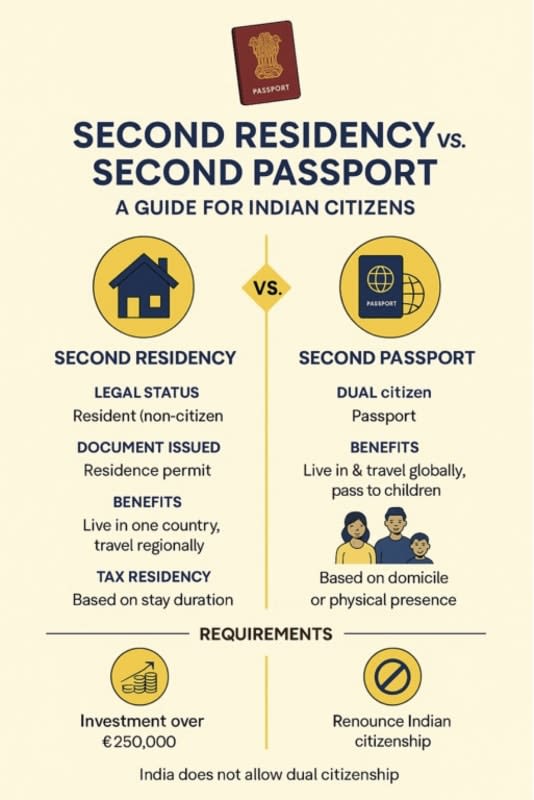

Many parents today are considering a second residency to expand future opportunities for their children. In a world influenced by economic changes, shifting rules, and increasing competition for talent, securing alternative legal status abroad can offer flexibility, stability, and access to environments that are better suited for long-term growth.
A second residency does not replace national identity. Instead, it adds a layer of security that gives families another location to live, study, work, and build wealth if circumstances change at home.
What second residency actually means
Second residency generally refers to a legal permit to live in another country for an extended period. These can be obtained through investment, entrepreneurship, employment, or other eligibility routes.
In many areas, certain residency categories can lead to permanent residency and, after a period of integration, naturalisation. This pathway is different from citizenship by investment programs, which grant nationality directly based on qualifying criteria and due diligence. Each area has its own timelines, investment requirements, and eligibility rules.
Key advantages for children
Families seek a second residency because it can greatly broaden their children’s developmental and career pathways. While outcomes differ across countries and depend on the specific residence type, the most common advantages include:
Access to strong education systems
Many countries offer public schools or subsidised university tuition for residents, often at much lower costs than international student rates. A second residency can grant access to well-rated schools, diverse academic settings, and highly ranked universities. Exposure to new cultures, languages, and learning standards helps children develop adaptability, confidence, and a global perspective.
Stronger healthcare options
Some countries have advanced healthcare systems with modern hospitals, reliable emergency care, and specialist facilities for children. Residents may access these systems through public coverage, mandatory insurance, or private options. For families focused on long-term wellbeing, this access can be a key factor.
Safer living environments
Many residency destinations are known for public safety, social infrastructure, and quality of life. Stable civic institutions, predictable legal systems, and cleaner urban environments create strong foundations for raising children.
Expanded mobility and opportunity
Depending on the location, residency or future citizenship can allow visa-free or visa-on-arrival travel to many parts of the world. This mobility opens career pathways, higher education options, and business opportunities in regions that might otherwise remain restricted.
Diversification and continuity planning
For globally minded families, a second residency is a long-term strategy for protecting assets. It can support international diversification, help manage future tax exposure, and create structural resilience against geopolitical or market shocks. In some cases, eligibility can extend to dependents, allowing children to maintain their own status as adults.
How to evaluate a second residency program
Selection should not be based solely on a headline investment amount. Families should carefully consider the following factors:
• Pathway to permanent residency or eligibility for citizenship through naturalisation
• Inclusion rules for dependent children
• Minimum residency or stay requirements
• Schooling options and tuition eligibility for residents
• Healthcare access mechanisms and waiting periods
• Tax rules and reporting obligations for residents and asset holders
• Due-diligence standards, source-of-funds requirements, and compliance obligations
• Types of investments allowed under the program and timeframe for holding assets
Illustrative destinations
Here are some high-level examples of countries that families often explore. Program availability, investment amounts, and eligibility are subject to change, especially within the European Union.
Portugal
Portugal offers relative safety, strong education, and residency pathways that can lead to citizenship through naturalisation. The Portugal Golden Visa is still active, now focusing on fund investments, cultural contributions, and scientific projects instead of property purchases. Current rules typically allow applicants to pursue citizenship after around five years of qualifying residency, subject to language proficiency, due diligence, and national requirements. Portugal also offers access to the EU’s Schengen Area, providing a familiar environment for families seeking education, cultural depth, and long-term planning.
Cyprus
Cyprus is a popular choice for families who prefer residency backed by property. Its long-standing residency framework has historically allowed foreign nationals to obtain long-term residency by purchasing real estate above a qualifying threshold, following due diligence and documentation standards. Major cities such as Limassol, Larnaca, and Nicosia feature international schools, English-speaking environments, authentic Mediterranean living, and direct access to the EU market.
For children, Cyprus provides affordable yet strong education options, a safe social environment, and the chance to maintain a long-term European presence. While final eligibility, timeframes, and specific routes may change, Cyprus remains a straightforward destination for property-linked residency with long-term positioning within the EU.
Greece
Greece is well-known for its Golden Visa program, one of Europe’s most accessible residency categories historically connected to real estate investment. The program has allowed families to invest in property and acquire long-term residency rights, giving access to the Schengen travel area and, in the long run, potential naturalisation pathways under Greek law.
Greece offers a mix of cultural heritage, safety, and European education standards. Cities like Athens, Thessaloniki, and Crete are increasingly attractive to international schools, remote-working opportunities, and foreign property buyers. Depending on future policy changes, Greece remains a strong EU option for families looking to hold European residency, build property value, and prepare children for future educational and professional opportunities.
Italy
Italy provides multiple residency routes that can lead to long-term establishment and eventual naturalisation. These include investment-based residence categories, entrepreneurial paths, and programs aimed at attracting economic contributors. Families favor Italy for its educational institutions, healthcare networks, and lifestyle factors that combine heritage, safety, and overall quality of life.
From a long-term perspective, residency in Italy can give children access to Europe’s academic scene, cultural proximity to leading innovation hubs, and the chance to live and study in one of the world's most historically significant countries. While eligibility for citizenship is obtained only through legal residence and integration, Italy remains an appealing European option for families planning for the future in education, culture, and business.
Malta
Malta offers an English-speaking environment, EU integration, and good healthcare and education options. Historically, Malta had an investor citizenship route; however, following a 2025 decision from the Court of Justice of the European Union that such programs violated EU law, Malta has been required to end investor-led citizenship. Today, families primarily look at Malta through residency routes with longer-term naturalisation possibilities, subject to changing EU regulatory expectations and future parliamentary decisions.
United Arab Emirates
The UAE combines modern infrastructure, a favorable tax environment, and some of the world’s safest cities. The country offers several long-term residency categories for eligible investors, business founders, professionals, and property buyers. Families benefit from a large network of international schools, broad commercial access, and strategic links to Europe, Asia, and Africa. While visas do not guarantee school admission, the UAE’s internationally oriented environment appeals to globally mobile parents.
Building long-term intergenerational value
When structured properly and within legal limits, residency or citizenship options can help families diversify assets, manage cross-border holdings, and enhance long-term financial security. Factors to consider include:
· Changing tax systems
· Reporting duties in home and destination countries
· Shifts in immigration policy
· Due diligence and compliance processes
· Protecting source-of-funds visibility
Advisors play an important role in ensuring compliance, especially for families subject to regulations such as India’s LRS and FEMA frameworks.
Final note
In a more interconnected world, a second residency can provide children with more than just a travel document. It can create environments that nurture their education, broaden their worldview, and support their ambitions. Its value lies not in replacing one country with another, but in giving families strategic options over the years.
If you are considering second residency or citizenship options to create a safer, stronger future for your children, professional guidance is essential. Understanding eligibility, investment structures, benefits for dependents, and long-term naturalisation pathways is crucial well before any paperwork begins.
Note
Residency and citizenship rules change frequently. The information below is general and should not be treated as legal, tax, or immigration advice. Always review current regulations and consult qualified advisors before making investment decisions.